Scalable Component System for Multi-Brand Marketing
Overview
Dental Whale's organization provided marketing services across 11 business sectors ranging from dental practice management, front desk training, equipment procurement, and patient acquisition services. Each new brand initiative required building custom landing pages from scratch. This approach couldn't scale. Production took 60+ hours per page, quality varied by designer, and monthly capacity plateaued at 10 or less pages. Meanwhile, business units needed marketing sites quickly to compete in their respective markets.
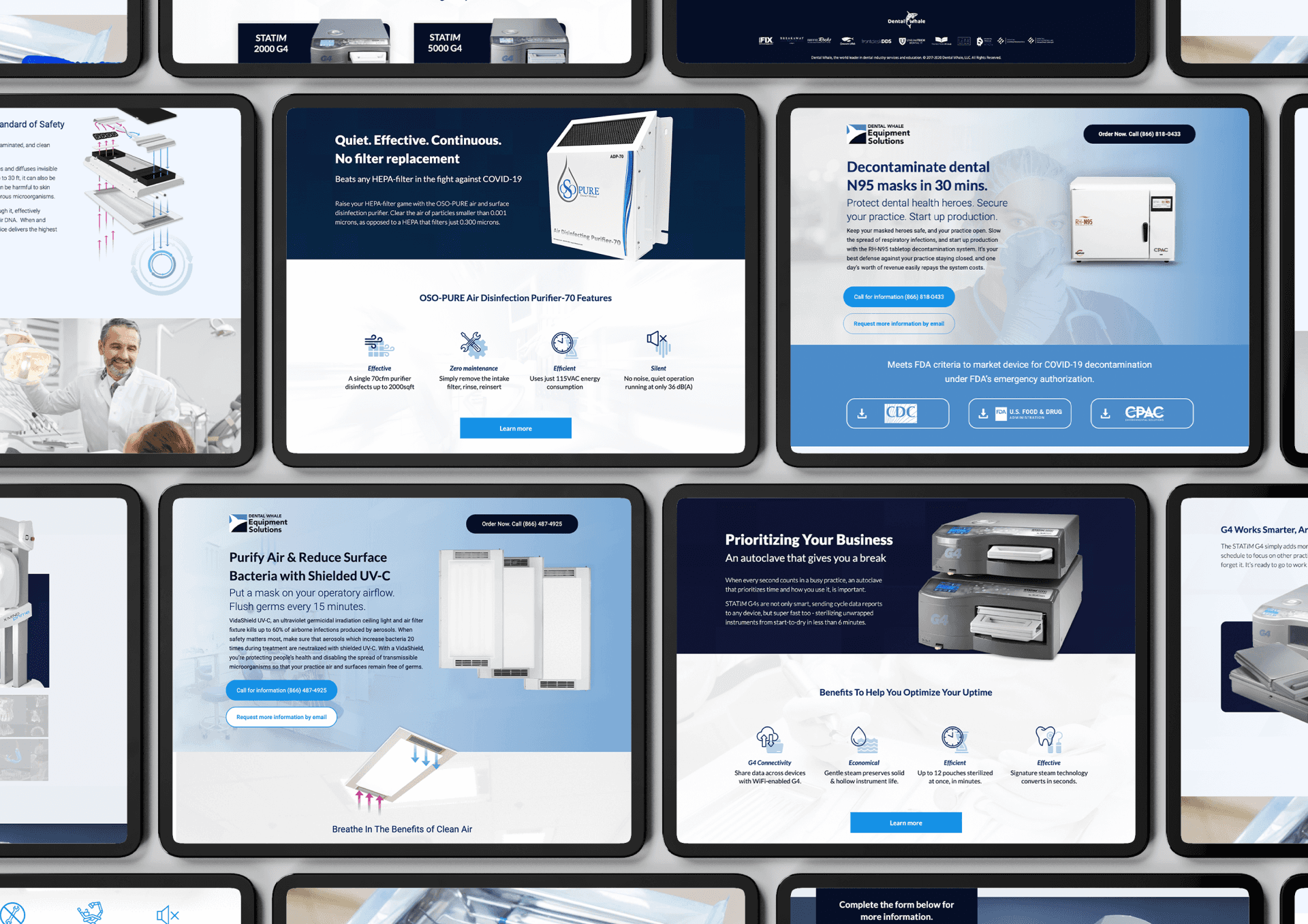
Versatile landing page designs powered by the component library and developed using Webflow.
Brief
Create a design system enabling rapid production of custom-feeling landing pages for diverse business units. The solution needed to feel personalized (not cookie-cutter templates) while allowing non-senior designers to produce high-quality work independently. Each business unit serves different specialties, geographic markets, and user demographics requiring visual flexibility within brand standards.
WHAT WASN'T WORKING
Custom design for each initiative meant 60+ hours per landing page.
Inconsistent quality depending on which designer handled the project.
No reusable patterns meant solving the same problems repeatedly.
Business units waited weeks for sites while competitors captured market share.
Junior designers required extensive art direction for each project.
Stakeholder revisions stretched timelines even further.
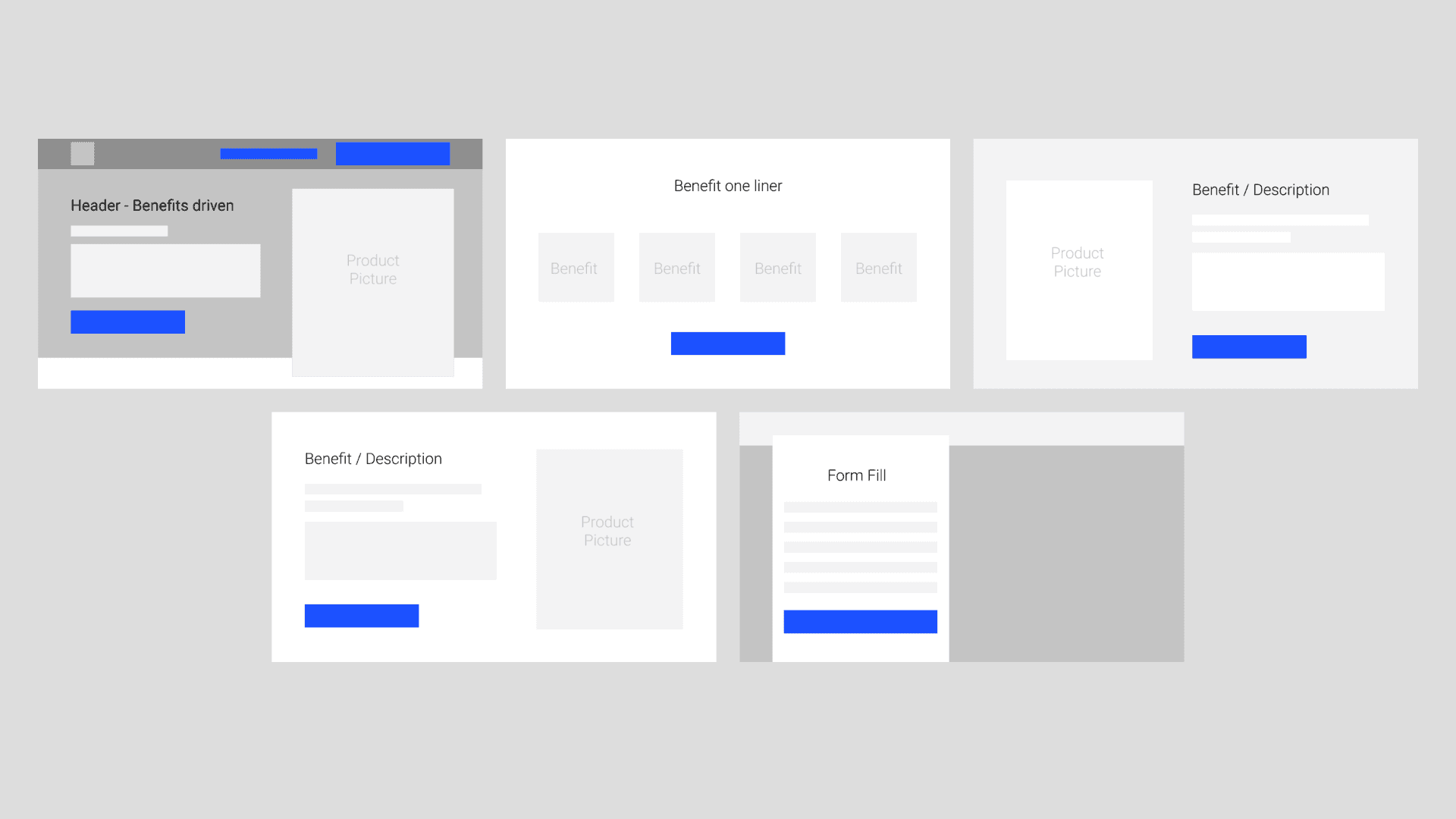
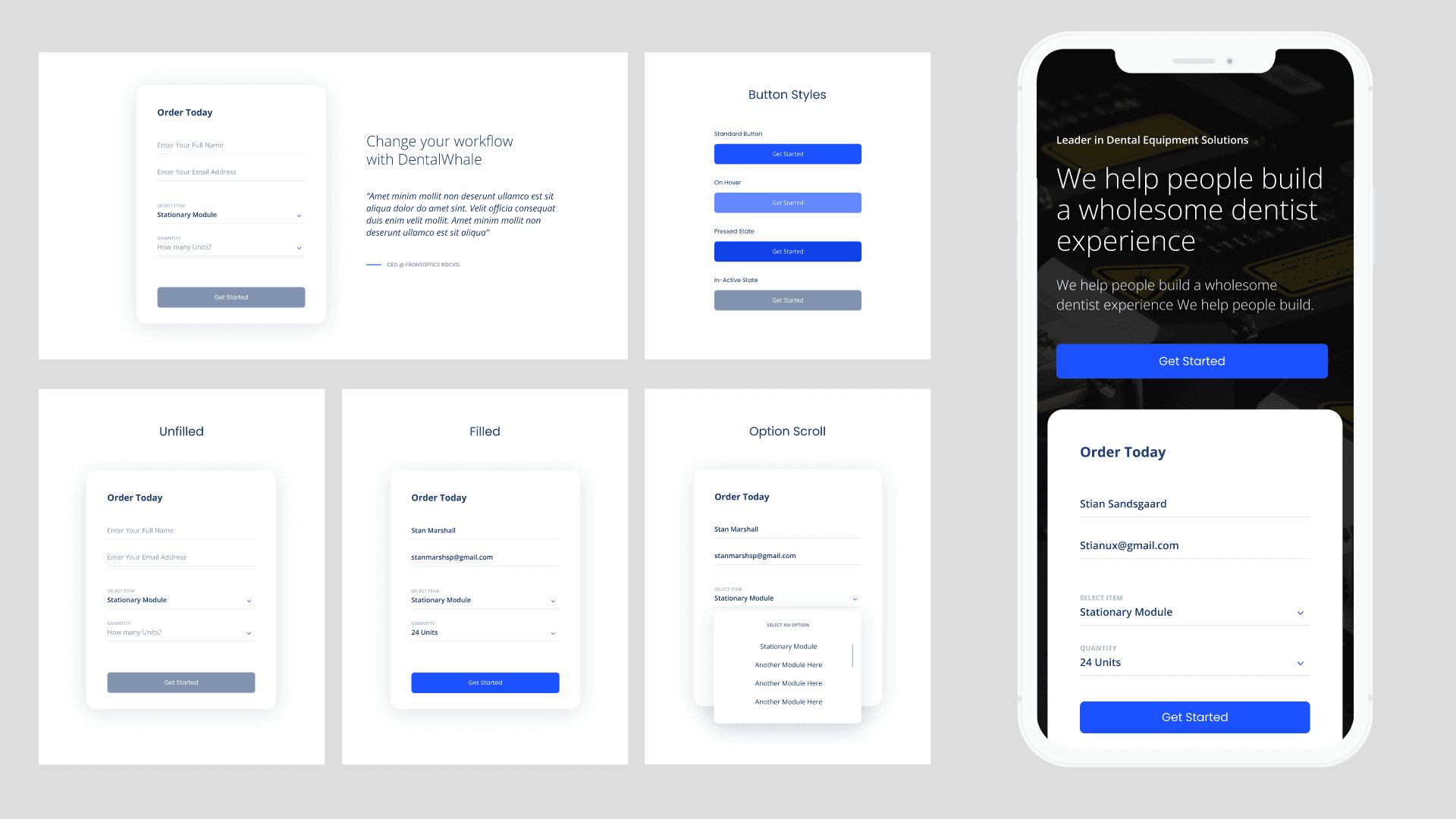
Wireframe and form component behavior.
Approach
The solution required identifying patterns across successful dental marketing while building flexibility for practice-specific needs. Rather than creating rigid templates, the strategy focused on modular components that could combine in multiple configurations. This would enable speed through reuse while maintaining the custom aesthetic business units expected.
The approach involved three phases: analyzing existing high-performing sites to extract reusable patterns, designing a component library with built-in flexibility, and testing the system to validate it worked across diverse scenarios.
SYSTEM FOUNDATIONS
Component Categories: Hero frames, product sections, content blocks, forms, CTAs, testimonials, stats.
Flexibility: 30+ components generating 10,000+ unique combinations.
Quality Controls: Automated accessibility checks, locked spacing rules, embedded brand guidelines.
Documentation: Usage guidelines enabling non-senior designer execution.
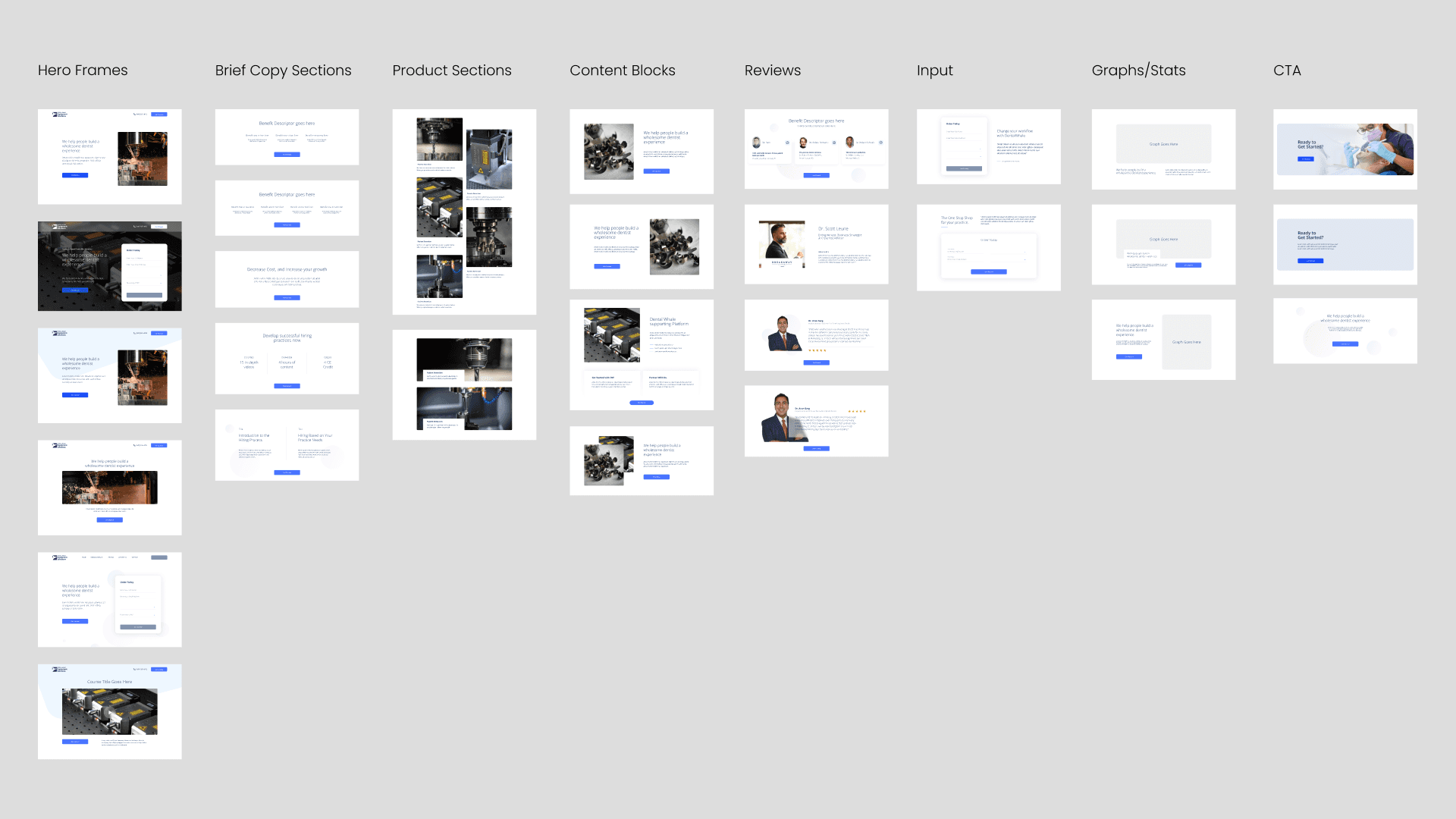
Component library enabling expedited, cross-brand landing page development.
Process
Research: Audited 50+ marketing websites across sectors to identify conversion patterns. Interviewed 10 stakeholders about marketing priorities. Analyzed performance data showing audiences prioritize trust signals (credentials, technology) and accessibility (contact, pricing, scheduling) before exploring detailed offerings.
Design: Created 30+ modular components organized by function (hero frames, product sections, testimonials, forms). Each component included 3-5 style variations preventing template feel. Tested with 10 pilot sites spanning different sectors to validate flexibility across use cases.
Documentation: Produced usage guidelines and trained 3 junior designers. Established feedback loops for continuous refinement based on production use.
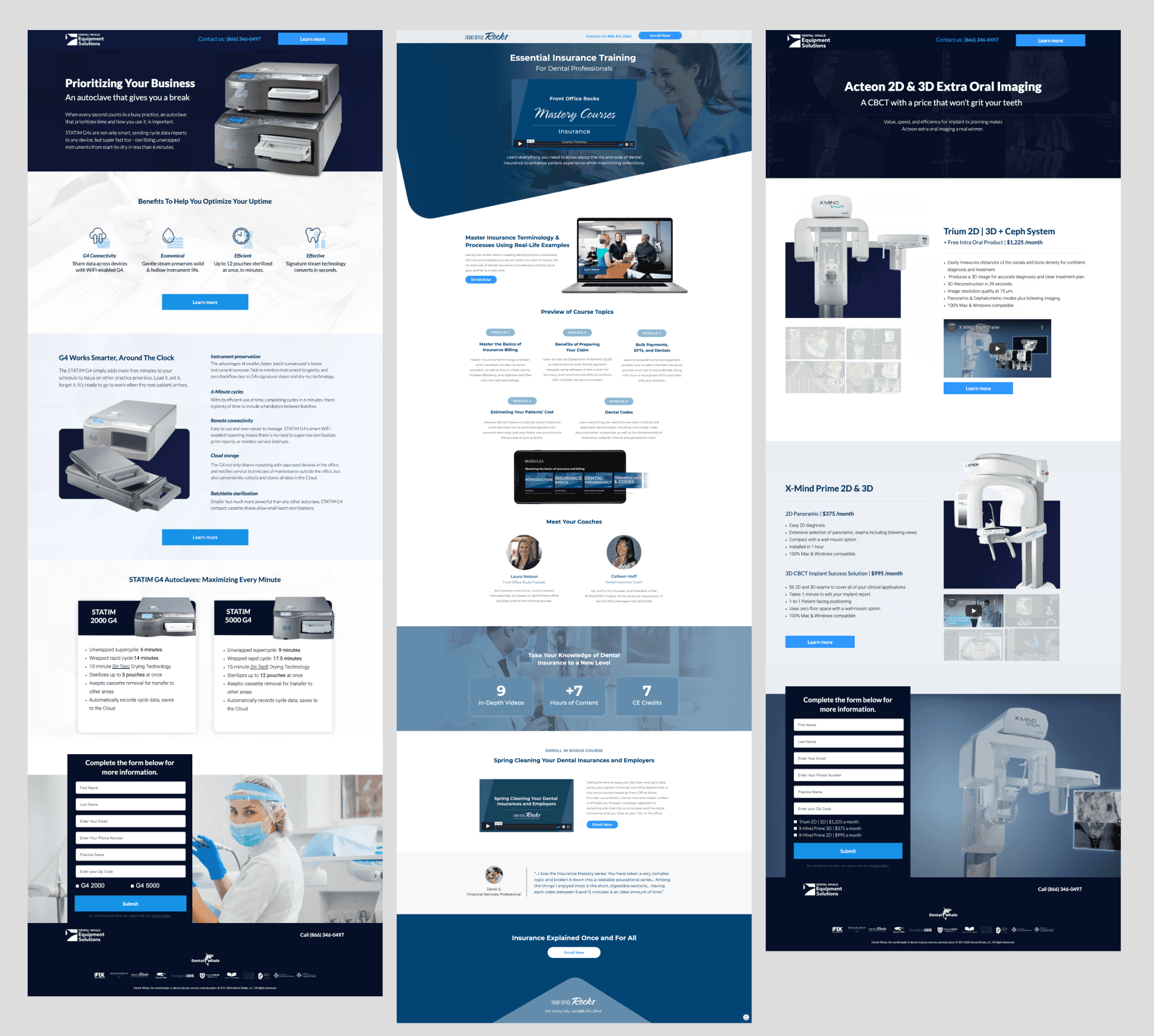
Complete landing pages demonstrating system versatility: product showcases (equipment and technology), service pages (training and protocols), and marketing content (practice growth strategies). Same component library generating distinct experiences across use cases.
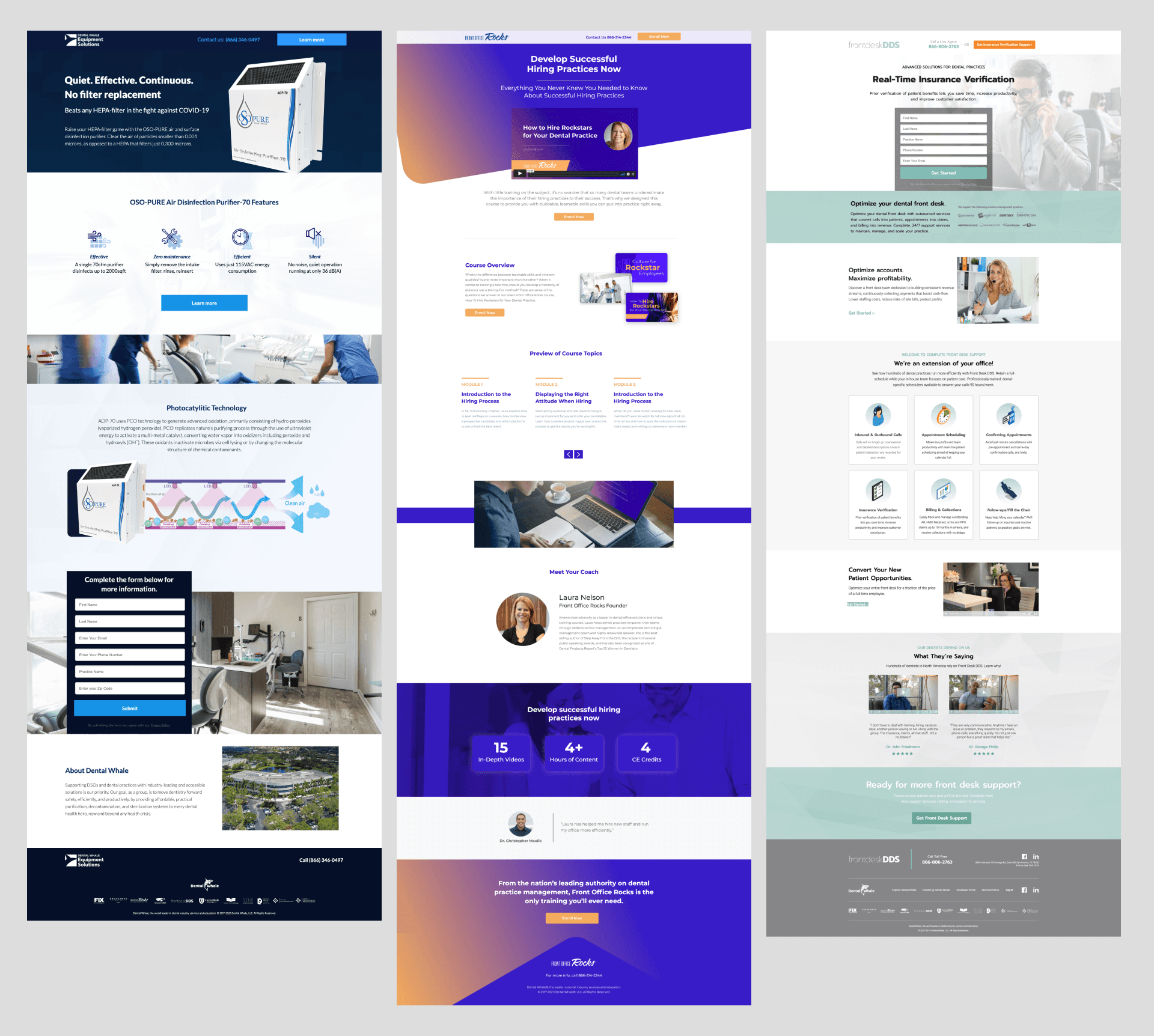
Design system supporting multiple brands under dental service organization: Front Desk Rocks (practice management training), OSO-PURE (disinfection technology), Front Office Rocks (insurance verification). Shared component architecture maintaining individual brand identities while enabling efficient production across portfolio.
Deliverables
Component Library: 30+ reusable components with style variations, accessibility specs, and responsive behavior.
Landing Page Templates: Proven structures for different practice types and patient acquisition goals.
Documentation: Guidelines enabling junior designers to produce senior-quality work independently.
IMPACT & OUTCOMES
50% Faster Production: Design time reduced from 60-80 hours to 30-60 hours per landing page, with some projects completing in as little as 16 hours when leveraging pre-built components.
Capacity Increase: Monthly output grew from 10 to 15+ pages.
Proven Scalability: System delivered pages across multiple brand sectors with 90% first-draft approval rate.
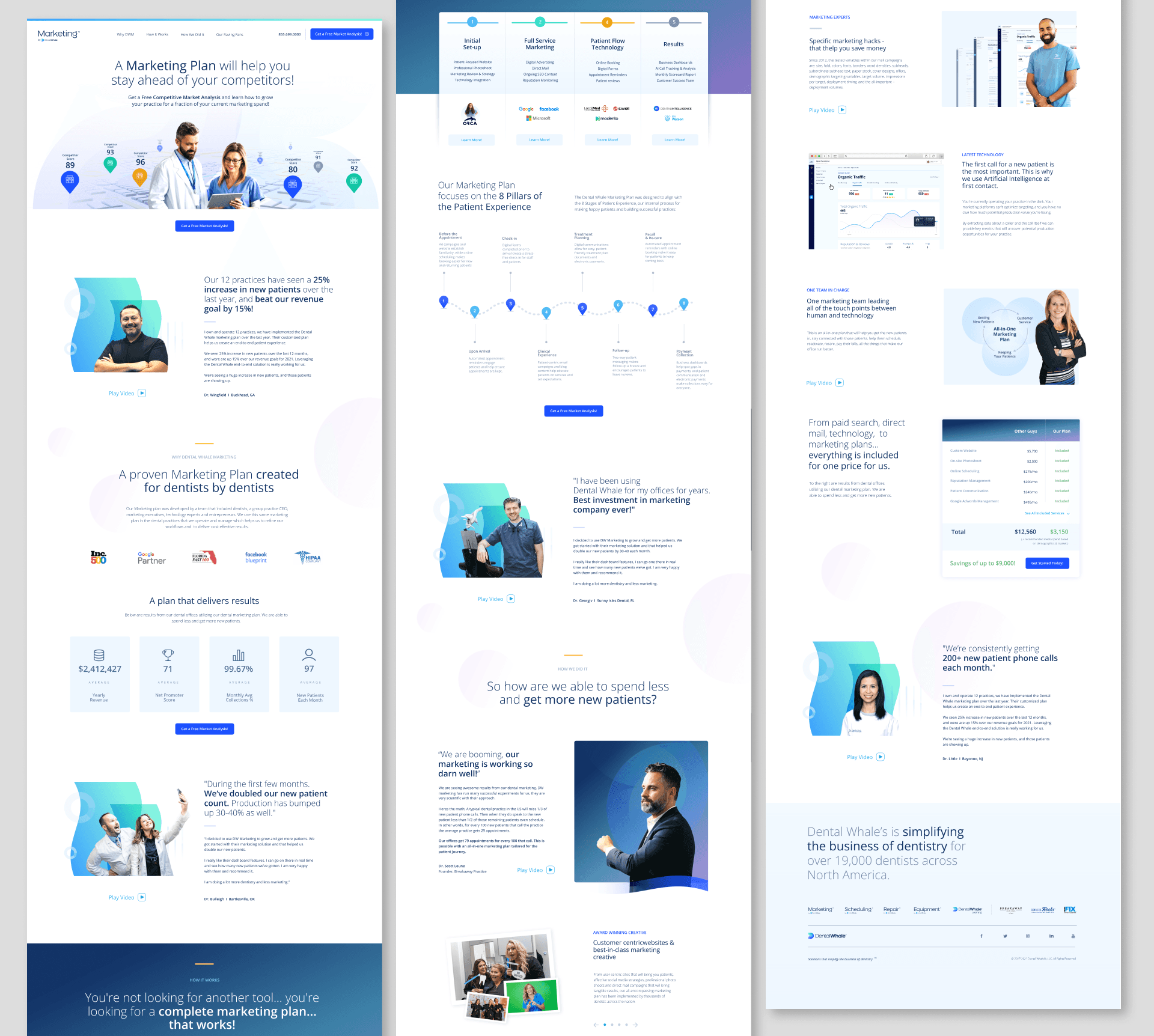
Practice marketing and growth content: patient acquisition strategies, competitive analysis, performance tracking, and ROI frameworks. Business-focused components supporting practice development beyond clinical services.